
Eyes Not Mouth
thoughts on "consuming" films, art, etc.

The eyes are not a mouth.
Like a mouth, they take the world in, allowing it to enter the body; but unlike the jaw, there is no mashing, no smashing, no mastication: only the delicate conversion of light into impulse impressed upon the mind. It is the mind that smashes,taking in the forest and separating the trees from each other, then taking the trees and separating them into branches and leaves, bark and roots, and then once again, refining the scene against every other forest afforded to memory, stitching things together in an act of sense-making.
We like to imagine our dominance. We are eaters Afterall, consumers. We have teeth in our eyes, and we mash up films and songs, then boil them down in our stomachs as we argue over their meanings. This dominance only occurs if we are the eater, the consumer; it offers us a seat above our victim, the male lion with its maw on the red throat of a cub.
The verb: consume. Meaning, to eat, from the Latin consumere, meaning to “use, eat up, or waste” - from com, meaning together or altogether , sumere coming from “sub” meaning under, and emere meaning “to buy /take “ - to take under oneself and use that which one has taken. This term, in the modern sense and common use of “consuming media”, implies a far more passive ( while maintaining its mirage of dominance), glutinous act, a verb that has forgotten it is a verb.
But I feel the term , while useful, is both overused and inaccurately understood. It works well for those who benefit from the consumer believing they are in control, but it does us a disservice. The eyes are not a mouth. The ear is not a tooth. The heart is not a jaw. Our passions are not merely appetites. We do not rule over what we see, hear, or engage with, with an iron mind; there is always an exchange. A symbiosis.
When watching a film, one is a witness to a world that would not have occurred otherwise- an eye into a world that naturally ( without cameras and those who wield them ) would have remained within the mind of the auteur. Even in the oral traditions, one would have listened intently as the speaker cast a spell over them, pulling them through the story with bated breath. What is given ( sculpted, forced, carved, enshrined, enscribed, something of violence something of great will and structure ) is taken in: that itself is true, however the taking is part of an exchange, not a theft, even if the audience does feel like they are getting away with something in watching the bodies of two strangers heave up and down in the projectors light. The story needs a witness, or else it is no more than private memory.
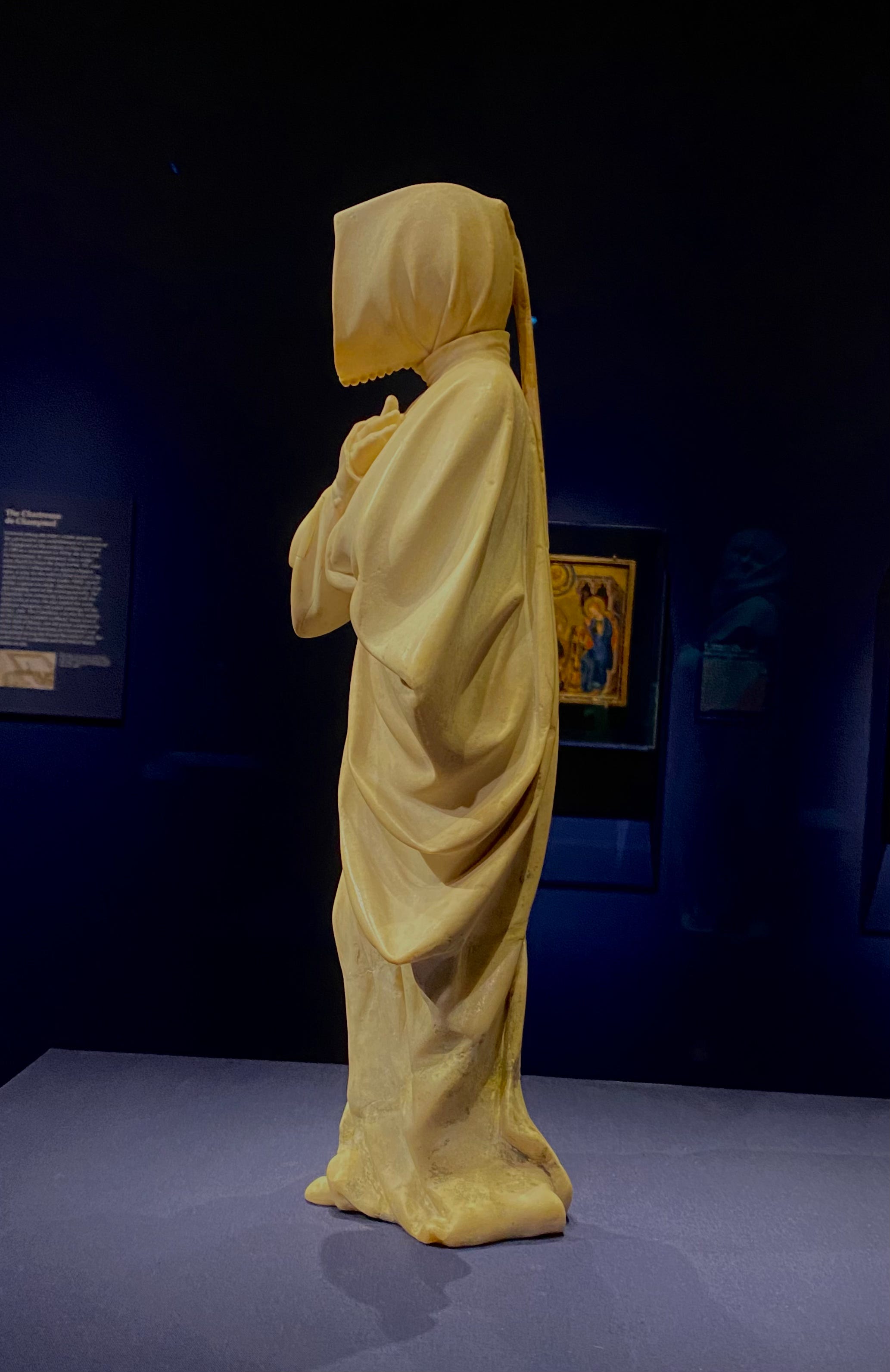
I worry that this word “consume” ( although I am not suggesting meaning changes, rather further understanding on the part of the “consumer” or witness ) has led those making art to make something for the sole purpose for it to be eaten, rather than making something to have a relationship with. Good art changes both the maker and the witness: a sculptor grows muscles as he carves them in marble, the viewer of the statue is stirred to a new emotion, to revelation.
The thoughts artists have impressed upon me have changed the landscape of my mind, my personality, my body. I cut my own hair so my Halloween costume would be accurate. I dream in three-act stories teeming with edible symbols. I crouch low and line up my sight with an angle of light cutting across the kitchen to preserve it for my own memory, a noncamera’ed photograph. I pause the memory mid-crouch and recall a landscape at the museum, where the paint itself seemed to glow and eat up the whole room, pulling me into its self-contained majesty, commanding that I give something of myself to it.
x
nim
this is so wonderful i love it!! such a great perspective